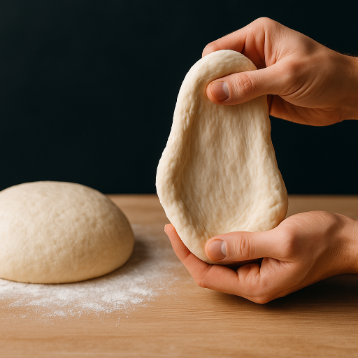
If you buy Neapolitan pizza dough expecting it to stretch effortlessly into a light, round base, it can be surprisingly frustrating when the dough snaps back, tears, or turns dense around the edges. The good news is that most stretching problems have very little to do with strength or luck. They usually come down to temperature, timing, and handling. Once you understand how this style of dough behaves, it becomes much easier to open it gently, keep the rim full of air, and build the kind of soft, blistered crust that defines a proper Neapolitan pie.
Why Neapolitan Dough Fights Back
Neapolitan dough is meant to be soft, elastic, and lively. That is exactly what makes it beautiful in the oven, but it is also what makes it sensitive in your hands. A dough ball that is too cold will resist stretching because the gluten is tight. A dough ball that is underproofed will shrink back because it has not relaxed enough. A dough ball that is overhandled will lose the delicate gas structure that creates the airy cornicione, or outer rim.
The first shift in mindset is simple: do not think of stretching as forcing the dough flatter. Think of it as guiding trapped air outward while leaving some of that air at the edge. That is why experienced pizza makers press from the center and avoid crushing the rim. Every movement should have a purpose.
- Cold dough resists and tears more easily.
- Overfloured dough feels dry and can become harder to shape evenly.
- A rolling pin flattens the gas pockets that give Neapolitan pizza its character.
- Rushing the process usually creates an uneven disc with a dense edge.
Understanding these basics matters whether you make dough from scratch or use prepared dough. For home cooks who want a dependable base and prefer to focus on handling and baking, it can make sense to buy Neapolitan pizza dough from a specialist rather than troubleshoot mixing and fermentation at the same time.
If You Buy Neapolitan Pizza Dough, Start With Temperature and Timing
The single biggest improvement most people can make is allowing the dough to warm up properly before shaping. Dough taken straight from the fridge is not ready to stretch. Even if it looks risen, it still needs time for the gluten to relax and the interior to lose its chill. If you skip this stage, the dough will feel stubborn, tight, and prone to snapping back the moment you try to widen it.
Room temperature matters, so there is no universal number of minutes that works in every kitchen. What matters more is the feel. Properly tempered dough should be soft, supple, and easy to indent lightly with your fingertips. If it still feels firm at the center, it needs more time.
- Keep each dough ball covered so the surface does not dry out.
- Let the dough sit until it feels relaxed, not cold and rigid.
- Dust the work surface lightly, rather than burying the dough in flour.
- Turn the dough out gently so you do not knock out all the gas.
This stage is where patience pays off. Good Neapolitan dough does not need aggressive stretching when it is properly rested. It should open gradually with little resistance. If the dough keeps shrinking, stop and give it another short rest instead of fighting it.
The Hand-Stretching Method That Preserves the Rim
Once the dough is ready, the goal is to create a thin center while protecting the outer edge. Start by placing the dough ball on a lightly floured surface. Using your fingertips, press gently in the middle and work outward in small motions, leaving a border around the edge untouched. You are not mashing the dough flat; you are pushing the internal gas away from the center and toward the rim.
As the disc widens, lift it carefully and continue opening it with your hands. Some cooks prefer to drape the dough over the backs of their hands and rotate it, allowing gravity to help. Others keep it on the bench and stretch by turning the disc a little at a time. Both methods work if the pressure stays gentle and even.
What your hands should do
- Press the center first. Flatten the middle while leaving the edge puffy.
- Rotate frequently. Small turns help keep the shape round and the thickness even.
- Support the dough. Use open hands rather than fingertips when lifting to avoid punctures.
- Let gravity assist. A short, controlled hang can help the dough lengthen naturally.
- Stop before it becomes paper-thin. Neapolitan pizza should have a tender center, not a fragile one.
If a small tear starts to form, set the dough down immediately and stop stretching that area. Trying to pull through it will only widen the hole. Often the best fix is simply to redirect the stretch to thicker parts of the dough and keep the weak spot minimally handled.
A useful rule is to avoid dramatic gestures. Throwing dough in the air may look impressive, but it is unnecessary for this style and often works against consistency. Neapolitan dough responds best to calm, controlled movements.
Common Mistakes After You Buy Neapolitan Pizza Dough
Prepared dough can be excellent, but it still needs proper treatment once it reaches your kitchen. Many issues blamed on the dough itself are really handling mistakes. The most common ones are overflouring, pressing out the rim, and loading the dough with toppings before the base is fully shaped and ready.
| Problem | Likely cause | Better approach |
|---|---|---|
| Dough snaps back | Too cold or not rested enough | Give it more time to warm and relax before shaping |
| Dough tears | Uneven pressure or overstretching one spot | Stretch gradually and redistribute pressure to thicker areas |
| Dense crust edge | Rim pressed flat during shaping | Leave a clear border untouched from the start |
| Dry, tough surface | Too much bench flour or uncovered resting | Use minimal flour and keep dough covered until needed |
| Misshapen pizza | Rushing and not rotating the dough | Turn the dough often and widen it in stages |
Another overlooked mistake is topping the pizza too slowly. Once the dough is stretched, it should not sit around on the peel for too long, especially if your toppings are wet. Moisture can soften the base and make transfer difficult. Shape with confidence, top efficiently, and get it into the oven while the dough still feels lively.
Final Checks Before Topping and Baking
Before you add anything, take one last look at the dough. The center should be thin but not translucent, the rim should still look slightly inflated, and the overall shape should be fairly even. Perfection is not the goal; balance is. A slightly rustic circle is far better than a perfectly round base with a compressed edge.
Keep toppings restrained. Neapolitan pizza relies on a soft, high-hydration dough and intense heat, so a heavy layer of sauce or too much cheese can overwhelm the structure you worked to preserve. Lighter topping also helps the dough bake quickly without becoming soggy.
- Make sure the peel is lightly floured and dry.
- Shake the pizza gently before baking to confirm it can slide.
- Work quickly once the dough is stretched and topped.
- Prioritise heat, speed, and balance over excessive garnish.
If your first attempt is not perfect, pay attention to the dough’s feel rather than only the final shape. Was it cold? Tight? Too soft? Too dry on the outside? Small observations like these will improve your results far faster than any single trick.
Conclusion
When you buy Neapolitan pizza dough, the secret to stretching it perfectly is not force but readiness. Warm dough stretches better than cold dough. Rested dough behaves better than rushed dough. Gentle hands preserve the rim, while smart timing protects the texture from bench to oven. Get those fundamentals right and the dough begins to cooperate, opening into a supple round that bakes with the tenderness, lift, and char that make Neapolitan pizza so satisfying. In the end, great stretching is less about technique alone and more about knowing when the dough is truly ready to be shaped.
For more information on buy Neapolitan pizza dough contact us anytime:
Dough Dorks | 48-Hour Neapolitan Pizza Dough | UK Delivery
https://www.doughdorks.co.uk/
England, United Kingdom
